
The program will focus on hot topics within surgical orthodontics and orthognathic surgery.
We care for more than 200 thousand exhibits spanning billions of years and welcome more than five million way
visitors annually.
We care for more than 200 thousand exhibits spanning billions of years and welcome more than five million way
visitors annually.


My worst case?


This conference explores the limits of compensatory and surgical treatments in clinical practice. It examines the key factors influencing the choice between conservative management and surgical intervention. The session highlights when compensatory approaches are no longer sufficient and surgery should be considered.
A practical decision-making framework will support individualized, evidence-based treatment planning.
We care for more than 200 thousand exhibits spanning billions of years and welcome more than five million way
visitors annually.
Planning the correction of a narrow maxilla with multisegment Le Fort I: What does really happen at dental and bone level?
Introduction Simon Graf
Simon Graf is the inventor and pioneer for 3d metal printed orthodontic appliances. Since 2014 he plans his metallic appliances virtual on an intraoral scan, and produces them directly with selective-laser melting, or 3d metal printing. Of course in the meanwhile many new printing options appeared, and also many more orthodontic appliances were converted to be printed directly. But not only metal printing evolved, also direct aligner printing is possible nowadays. Simon gives a lecture, where he collects all his experience over the years, and presents all different up-to-date printing possibilities for 3d metal printed appliances, and for direct printed aligners.
Looking back on 12 years of 3d metal printed appliances
The first 3d metal printed orthodontic appliance was printed and used in a patient’s mouth in April 2014 in the clinic Smile Inc. of Simon Graf. In his lecture he will look back on the failures, pitfalls and final success of the approach to virtually plan and direct print orthodontic appliances. Simon Graf will specific point out the clinical side of bonding and debonding of 3d metal printed appliances, as many clinicians struggle in this point. He will outline the mandatory steps for a successful combination with skeletal anchorage device like TADs and share his experience during the last 13 years with the audience.
Session learning points


We care for more than 200 thousand exhibits spanning billions of years and welcome more than five million way
visitors annually.




Why we have been searching for a new and more reliable diagnostic method.
- The complete methodology presented in a clear, step-by-step format.
- How to apply this protocol in everyday orthodontic and orthognathic surgery cases.
We care for more than 200 thousand exhibits spanning billions of years and welcome more than five million way
visitors annually.
Orthognathic surgical virtual planning in patients with condylar pathologies
- Differential diagnosis of transverse discrepancies in orthognathic surgery patients.
- How to determine whether the problem is dentoalveolar, when segmental Le Fort I osteotomy is indicated, and when SARPE should be considered prior to surgery.
- Diagnosis and treatment planning illustrated through clinical cases.
We care for more than 200 thousand exhibits spanning billions of years and welcome more than five million way
visitors annually.


1. When the complaint outweighs the clinical findings
Disproportionate distress, preoccupation or conviction may point towards BDD or a delusional disorder rather than a problem that can be corrected surgically.
2. The patient’s conviction is a clinical clue.
Explore not only what the patient sees, feels or believes, but also how certain they are, how much time it occupies, and how it affects daily functioning.
3. Know when not to operate.
In BDD and delusional infestation, repeated procedures, investigations or attempts to “fix” the perceived problem may reinforce the disorder and lead to dissatisfaction, further treatment-seeking and harm.
4. Do not fight the belief, build an alliance.
Acknowledge the patient’s suffering without validating an unsubstantiated explanation. Curiosity, empathy and a non-confrontational approach create the opportunity for appropriate treatment.
5. Recognition is an intervention.
Early identification of BDD or delusional infestation, followed by collaboration between MKA surgeons, dermatologists and mental-health professionals, can prevent unnecessary procedures and change the patient’s trajectory.


• Our Le Fort I osteotomy has evolved since we first published it 13 years ago
• Maxilla first?
• The role of PSIs
Introduction Simon Graf
Simon Graf is the inventor and pioneer for 3d metal printed orthodontic appliances. Since 2014 he plans his metallic appliances virtual on an intraoral scan, and produces them directly with selective-laser melting, or 3d metal printing. Of course in the meanwhile many new printing options appeared, and also many more orthodontic appliances were converted to be printed directly. But not only metal printing evolved, also direct aligner printing is possible nowadays. Also the orthodontic retention is evolving with new cad/cam procedures and he keeps up with the latest trends and research for this topic as well. New high-tech is not just important for 3d printing in the clinic, AI changes also the way how orthodontists will be able to learn, plan and teach orthodontic treatments. Simon gives 3 lectures, where he collects all his experience over the years, and presents all different up-to-date printing possibilities for 3d metal printed appliances, direct printed aligners, cad/cam retention and his vision for the orthodontic future with the new tool AI.
Non surgical approach for Class II treatment with the Herbst appliance
Simon Graf will be presenting about the clinical details of the herbst-appliance, which was introduced back in 1905 by Emil Herbst as a fixed class II correction appliance in orthodontics. 2014 Simon Graf converted the classic metal cast Herbst appliance in the digital era with virtual planning and 3d metal printing. He will share his failures and how to avoid them.
Besides the class II correction, he will introduce various options, for what else the Herbst-appliance and its side-effects can be used. Specifically for enforced anchorage in space closure with agenesis of lower premolars, distalizing the buccal segments in the upper jaw to align ectopic canines and improvement of the airway.
Session learning points
Facial asymmetry is a three-dimensional challenge that extends well beyond correction of the dental and skeletal midlines. Its consequences include occlusal canting, uneven facial contours, malocclusion, impaired mastication, temporomandibular joint dysfunction, airway compromise, and psychosocial burden. Comprehensive assessment therefore requires simultaneous evaluation of the skeletal framework, soft tissues, muscles, condyles, and airway. Three-dimensional CBCT, intraoral scanning, and stereophotogrammetry enhance diagnostic accuracy, while virtual surgical planning, surgical guides, and patient-specific implants facilitate precise simulation and transfer of planned skeletal movements. However, accurate skeletal repositioning does not necessarily ensure soft-tissue harmony, and surgery may also affect adjacent anatomical and functional structures. Treatment should therefore combine precise skeletal repositioning with soft-tissue-oriented planning, careful TMJ and airway evaluation, and, when required, staged or adjunctive procedures to achieve stable, functional, patient-centred outcomes.


• There is no single ideal BSSO for every patient.
• The osteotomy should be adapted to anatomy, movement and biomechanical requirements.
• How rigid fixation needs too be?
- AI for clinicians: what’s behind the black box?
- Can we trust systems we do not fully understand?
- Promising developments in AI-driven orthognathic planning.
- How to stay in control in an increasingly automated workflow?
Successful orthognathic correction of dentofacial asymmetries requires accurate diagnosis and effective presurgical orthodontic decompensation. Particular attention will be given to transverse discrepancies, dental midlines, occlusal cant, arch coordination, and asymmetric tooth positioning. Clinical strategies will be presented to optimize orthodontic preparation while avoiding movements that could compromise surgical planning or postoperative stability.
A coordinated orthodontic-surgical approach will enable more predictable functional, occlusal, and aesthetic outcomes.





Impact of bimaxillary orthognathic surgery on sleep quality: A prospective macro-micro structural radiographic and polysomnographic study

- The orthognathic surgery patient prototype has evolved substantially: While correcting a dysfunctional occlusion used to be the key concern, the wish to optimize facial esthetics—in the context of a dysfunctional occlusion or not—has currently become the main motivation for treatment in many cases.
- The number of adult patients who wish to undergo orthognathic surgery is increasing steadily. The coexistence of natural cervicofacial aging changes in these patients is very common. These changes are not always managed effectively with skeletal repositioning alone.
- Many cervicofacial soft tissue aging changes can be treated concomitantly at the time of orthognathic surgery.
- As in facial plastic surgery, a well-defined, sculpted jawline is a key goal in orthognathic surgery.
- This lecture offers the speaker’s approach for combined skeletal repositioning and jawline rejuvenation. Clear guidelines for patient selection and technical pearls for enhanced facial results will be given.

What does it mean to be a “good doctor” in modern healthcare and orthognathic practice? This presentation will explore the concept of goodness in medicine from multiple perspectives, examining how doctors/orthodontists, patients and society define and recognise professional excellence.
Drawing on evidence from medical education, professionalism literature and contemporary practice, the session will consider how values, behaviours and professional identity are developed throughout a doctor's career, and how we teach and assess what it means to be a good doctor. The presentation will also explore the growing influence of social media and the emergence of publicly accessible online profiles in shaping professional reputation and public trust.
Looking ahead, the session will examine how advances in artificial intelligence, digital technologies and robotics may redefine expectations of the future orthognathic clinician. As healthcare evolves, what uniquely human qualities will remain essential, and how should we prepare the next generation of clinicians?
The presentation will invite surgeons and orthodontists to reflect on their own professional practice and consider the enduring and emerging characteristics of a good doctor in the twenty-first century.
- A holistic approach to orthognathic surgery involves a paradigm shift where the focus moves from “just” a functional occlusion to the comprehensive restoration of facial esthetics, occlusal health, airway function, and full dental rehabilitation. This treatment concept entails the incorporation of more disciplines into the conventional Orthodontics-Surgery dyad.
- Many orthognathic surgery patients have a worn dentition, missing teeth and/or altered vertical dimensions that cannot be resolved by bone movement alone.
- On the other hand, conventional full pre-surgical orthodontic decompensation is not always necessary to plan the skeletal movements. However, an unstable occlusion may hinder postoperative bone healing. In these cases, targeted dental restoration may bridge the transition phase and allow for a surgery-early approach.
- This presentation will share practical workflows for everyday scenarios where Restorative Dentistry can close the gap between skeletal correction and comprehensive full-face rehabilitation. These integrated protocols aim to optimize results while significantly reducing overall treatment times.
Enhanced Recovery After Surgery (ERAS) pathways are multimodal, evidence-based strategies designed to optimise perioperative care by minimising surgical stress, standardising clinical practice, and promoting a faster and safer recovery. Although these protocols have been successfully integrated into many surgical specialties, evidence supporting their application in orthognathic surgery remains relatively limited. This presentation will explore the association between the implementation of a structured ERAS protocol and key perioperative outcomes in patients undergoing orthognathic procedures, with particular emphasis on postoperative recovery, complications, length of hospital stay, and overall patient experience.
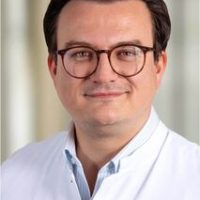
• Get on overview of technological ways to approach orthofacial surgery
• Understand which procedures are best predictable and benefit from virtual planning and PSI
• See the plethora of Patient Specific Implants and materials to shape the face beyond the bite
• Learn what technology we need for the facial design software of the future

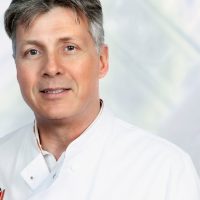
• MMA is the most effective surgical procedure for treatment of OSA, it can significantly decrease AHI, LSAT and ESS scores.
• MMA significantly decreases snoring complaints and can improve the quality of sleep and quality of life.
• Larger movements of the mandible should be stabilized with two plates and grafting should be considered.
• Patient specific osteosyntheses give superior accuracy in positioning of the bony segments.